
Selling a Bronx House in Foreclosure: Which Steps Do You Control, and Which Does the Court?
If you are behind on your mortgage in the Bronx and a foreclosure case has already been filed against you, the question you are probably asking at two in the morning is some version of this: can I still sell, and how much time do I really have? Homeowners searching steps to sell a home in New York City usually find a tidy numbered list — price it, prep it, list it, negotiate, close. That list is not wrong. It just quietly assumes you are the one holding the calendar. In a foreclosure you are not. Two calendars are running at once, and only one of them is yours.
This is about telling the two apart: which steps you still control, which dates the Bronx County Supreme Court controls, and where the option to sell closes for good. The Bronx is home to roughly 1.47 million people and is the only one of New York City’s five boroughs sitting on the American mainland, separated from Manhattan by the Harlem River and running north to the Westchester County line it shares with Yonkers and Mount Vernon. Wherever your house sits inside it, the clock works the same way.
Get Your Free Cash Offer Now!
Fill out this form to get your no-obligation all cash offer started!
Get Your Free Offer TODAY!
"*" indicates required fields
Can you still sell a Bronx house once a foreclosure case has been filed?
Yes. In New York you can sell right up until the moment the property is sold at auction — but not one day after.
New York gives homeowners what the courts call the equity of redemption: the right to pay off what is owed, or to sell and pay it off from the proceeds, at any time before the foreclosure sale. Filing a case does not take your house away. You still own it, you can still sign a deed, and a closing before the auction ends the foreclosure.
The other half of that rule is unforgiving. Unlike many judicial foreclosure states, New York gives you no redemption period after the sale — once the property is sold under a judgment of foreclosure and sale, ownership transfers and the window is gone. Wider than most people fear, with a hard edge and nothing behind it.
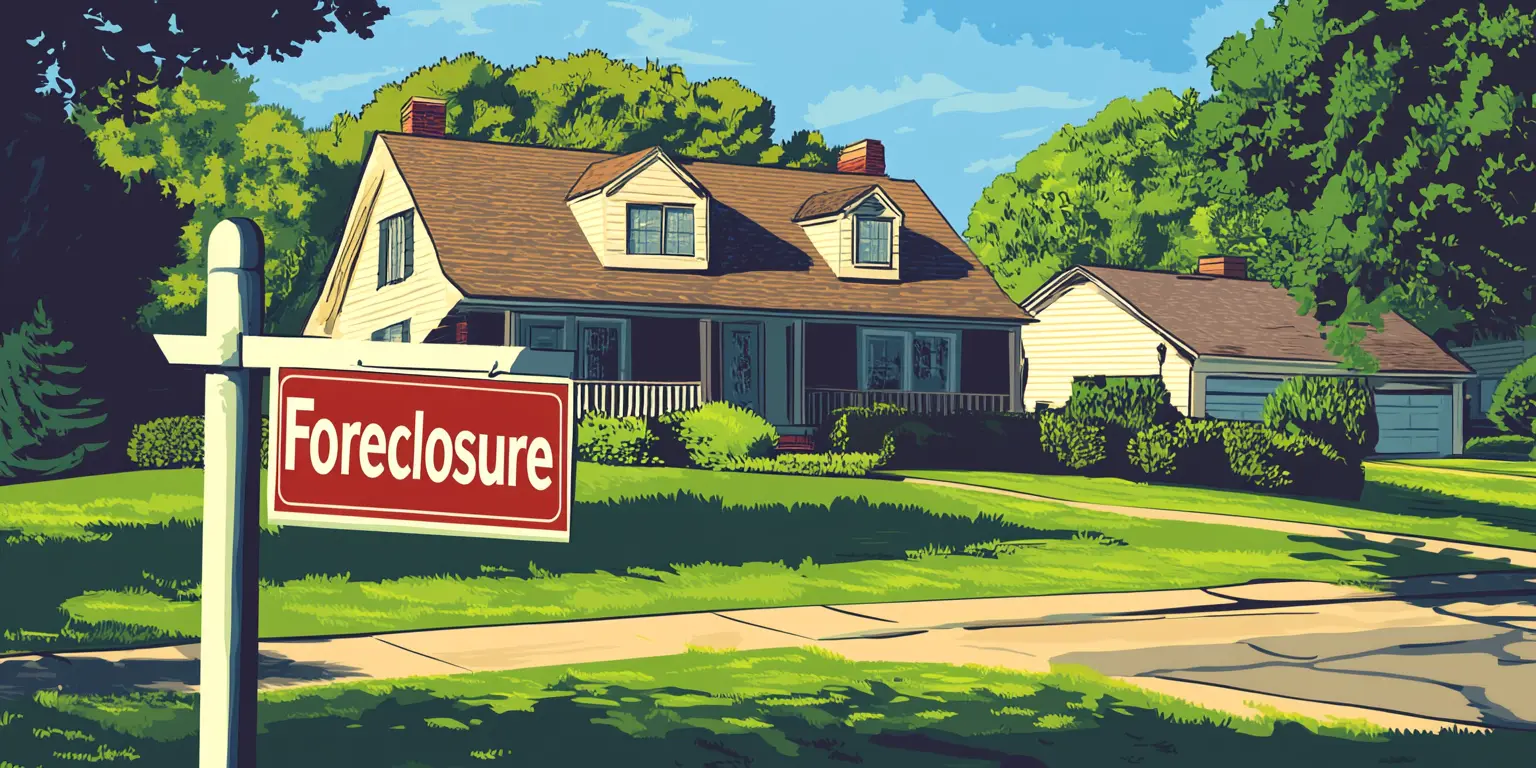
Which steps do you still control?
You control price, buyer, condition and — within limits — the closing date. You do not control when the case moves.
Nothing about a filing forces you to accept a particular offer or a particular kind of sale. What changes is that two background details move to the front and start driving everything.
The first is your payoff figure. It is no longer the balance on your last statement — it now includes arrears, late charges and the lender’s legal fees, and it grows every month the case runs. Ask the servicer for a current payoff letter the day you decide to sell; they regularly take two to three weeks. The second is your buyer’s financing: a mortgaged buyer brings an appraisal, an underwriter and a 45-to-60-day path to closing that a low appraisal can derail exactly when you have no time to re-list.
The usual steps to sell a home in New York City — and where foreclosure reorders them
The ordinary sequence puts financing near the end. Foreclosure drags it to the front.
Normally you prepare the house, list it, collect offers, sign a contract, wait out the buyer’s financing and close. In foreclosure that order inverts. The first question is not what the house is worth — it is what you owe today, and whether a closing can physically happen before the sale date. Only then does price matter.
That inversion is the real reason so many people in foreclosure choose to sell a Bronx house as-is for cash. It is rarely because cash produces the biggest number. It is because it is the one sequence that reliably fits inside a court calendar. Our cash offer process has no appraisal, no lender and no financing contingency to collapse at the last minute.
Which dates does the court control, and where do they come from?
Three dates matter: the 90-day notice, the settlement conference, and the auction. Each comes from a different place.
What is the 90-day notice, and does it start the clock?
It is a warning letter your lender must send at least 90 days before it is allowed to file suit. It is not the case itself.
Under section 1304 of New York’s Real Property Actions and Proceedings Law, a lender must send this notice by certified or registered mail and by first-class mail before commencing a foreclosure action on a home loan. It arrives in at least 14-point type and opens with the line “YOU MAY BE AT RISK OF FORECLOSURE,” which is why it frightens people so badly. Courts treat strict compliance as a condition of being allowed to sue at all.
Here is the part worth sitting with: this letter marks the calmest stretch of the timeline. No case filed, no judge, no auction date. Sell during these months and you will almost certainly do better than in the ones that follow, because you still have the luxury of choosing.

What happens at the settlement conference in the Bronx?
Under CPLR rule 3408 the court must hold a mandatory settlement conference within 60 days after the lender files proof that you were served.
In Bronx County that conference is held in the Foreclosure Settlement Conference Part, Room 701A of the Bronx County Courthouse at 851 Grand Concourse. It applies to one-to-four-family homes where the borrower actually lives in the property, and both sides are required to negotiate in good faith toward a resolution.
Most homeowners walk in thinking of it as a hearing they might lose. It is closer to a scheduling table, and it is the best place to buy yourself time. A lender’s attorney hearing “we have a signed contract and a closing date in five weeks” behaves very differently from one hearing silence.
When exactly does the option to sell close?
At the auction — and in the Bronx that auction has a standing time and place you can look up.
Bronx County foreclosure auctions are held in Courtroom 711 at 851 Grand Concourse, Bronx, NY 10451, on Mondays at 2:15 p.m. Until the property is struck down to a bidder there, you can still sell it or pay the debt off in full. After that, ownership has moved and there is nothing left to sell.
So the date on the notice of sale is the number to work backwards from. Count the weeks, subtract what a payoff letter and a title search take, and you will know whether a mortgaged buyer is realistic. That arithmetic, not optimism, should decide how you sell — it is what we are asked most often as Bronx cash home buyers.
If the auction happens anyway, what happens to your equity?
Any surplus still belongs to you — but it is paid into court, not to you, and you have to go and claim it.
Under RPAPL 1354 the officer conducting the sale must pay any surplus money into court within five days of receiving it. Getting it out means a surplus money proceeding, and anyone with a lien — a second mortgage, a judgment creditor, unpaid taxes — is paid from that money before you are.
This matters more in the Bronx than people assume. A two-family in Wakefield, where the borough line runs right up against Mount Vernon, can easily be worth far more than the mortgage against it. An auction turns that equity into a court claim you chase for months and share with strangers; a completed sale hands it to you at the closing table.

When is selling to a cash buyer the wrong move here?
When you have time, equity and steady income. Then a cash sale is the expensive answer to a problem you can solve more cheaply.
If you can reinstate the loan by paying the arrears and fees, do that and keep your house. If a modification is plausible, the settlement conference exists for exactly that conversation, and a HUD-approved housing counsellor will prepare you for it at no cost. And if the sale date is months out and you can carry the payments meanwhile, list it — on a healthy Bronx property with real runway a listing usually nets more even after commission, and we will tell you so.
A direct sale earns its place in three situations: the sale date is too close for a mortgaged buyer, the house needs work you cannot fund, or you have had enough and want it finished cleanly. If one of those describes you, talk to someone who will buy your Bronx house on a date you choose, in the condition it is in today. We are a family-run local business, not a law firm — for the case itself, speak to a foreclosure attorney or a housing counsellor.
To find out whether a sale can close before your date and what it is worth, fill in the form below or call us at (347) 685-9317. No obligation, and no fee for finding out where you stand.
Get Your Free Cash Offer Now!
Fill out this form to get your no-obligation all cash offer started!
Get Your Free Offer TODAY!
"*" indicates required fields