
Can You Sell a Brooklyn House With Open DOB Violations?
If there is an open violation sitting on your Brooklyn house, the first thing you probably want to know is whether that piece of paper has quietly taken your home off the market. It hasn’t. Houses with open violations sell in Brooklyn every week. But a violation is not one item in one place — it is a record that gets copied into several separate city systems, and each copy behaves differently when you try to close. It is why owners get contradictory answers from neighbours, agents and contractors. We are a small family-run company that buys homes directly from owners, so if you would rather skip the repairs and the hearings and just sell your house for cash, that option is open — but you deserve to understand what you are holding first.
Brooklyn is Kings County: 2,736,074 people at the 2020 census, the most populous of New York City’s five boroughs and the most populous county in New York State. It sits at the western end of Long Island and shares its only land border with Queens, separated from Manhattan by the East River and from Staten Island by the Narrows. That matters for one practical reason: Brooklyn sits inside New York City, so your violations come from city agencies with their own hearing calendars and collection powers — not a town building department you can sort out with one phone call.
Get Your Free Cash Offer Now!
Fill out this form to get your no-obligation all cash offer started!
Get Your Free Offer TODAY!
"*" indicates required fields
Can you sell a Brooklyn house that has open violations on it?
Yes. An open violation is a debt and a to-do item attached to the property, not a freeze on your right to sell it. Nothing in the violation itself removes your ability to sign a deed. What they change is who will buy, how long closing takes, and how the money is divided at the table. A buyer using a mortgage may be blocked by their lender or title company over certain items; a cash buyer can usually take the property as it stands and handle the paperwork afterwards. Almost nobody explains the useful part: the violation is rarely the obstacle. The financing behind the buyer is.
Where does an open Brooklyn violation actually live?
In four separate places, and you have to check all four, because clearing one does not clear the others. Owners often pay a fine, assume they are finished, and find the item still showing months later.
What does the Department of Buildings record against the property itself?
DOB attaches the violation to your building’s address and its own internal record of the property, so it follows the house rather than you. If you sell, the new owner inherits the open item. The Brooklyn Borough Office of the Department of Buildings sits at 345 Adams Street, 3rd Floor, Brooklyn, NY 11201, and that record is what a buyer’s attorney pulls up on your address. Common Brooklyn examples: unpermitted work on a cellar or rear extension, an illegal third unit in a two-family, or a certificate of occupancy that no longer matches how the house is laid out.
Why does the hearing matter more than the violation?
Because most Department of Buildings violations are summonses that get heard by the city’s Office of Administrative Trials and Hearings, and ignoring the hearing is far more expensive than losing it. For Brooklyn property, OATH’s Hearings Division sits at 9 Bond Street, Brooklyn, NY 11201. Show up or submit a defence and you may get the penalty reduced, or time to correct the condition. Skip it and you take a default, which typically carries a higher penalty than the one you faced originally. Plenty of the frightening numbers owners show us began as a modest summons nobody answered.
How does an unpaid violation end up on your property tax bill?
The city can convert unpaid judgments from those hearings into liens against the property, and those liens then appear on the property tax bill. The Department of Finance handles that side, and it is the step that turns ignorable mail into something that must be dealt with at closing, because it comes out of the proceeds. If you do not know whether your old violations have reached this stage, check that first.
What does a Housing Preservation and Development violation add?
If your house has tenants, HPD runs a second, separate violation system graded by hazard: Class A is non-hazardous, Class B is hazardous, and Class C is immediately hazardous. A Class C item — no heat, no hot water, a lead or mould condition where a young child lives — carries the shortest clock and the most attention. Owners of two- and three-family houses in neighbourhoods like Bed-Stuy are often surprised to find DOB and HPD items open at once, from two agencies that do not talk to each other.
Which open items actually stop a Brooklyn closing, and which just cost money?
The ones that stop a closing are the ones that cloud title or contradict the certificate of occupancy; everything else is a number to be negotiated. A docketed lien has to be satisfied at closing, so it comes out of your proceeds whether you like it or not. A certificate of occupancy that says two units where the house is plainly used as three can stop a mortgage lender cold, because the lender is being asked to finance something the city does not recognise. An open summons for a missing handrail or an unswept sidewalk, by contrast, is just a cost — ugly on paper, minor in a negotiation. Lumping all of this together as “violations” is what makes owners panic, and it is why cash home buyers in Brooklyn will usually ask to see the actual list rather than reacting to the word.
Do you have to clear the violations before a cash buyer will close?
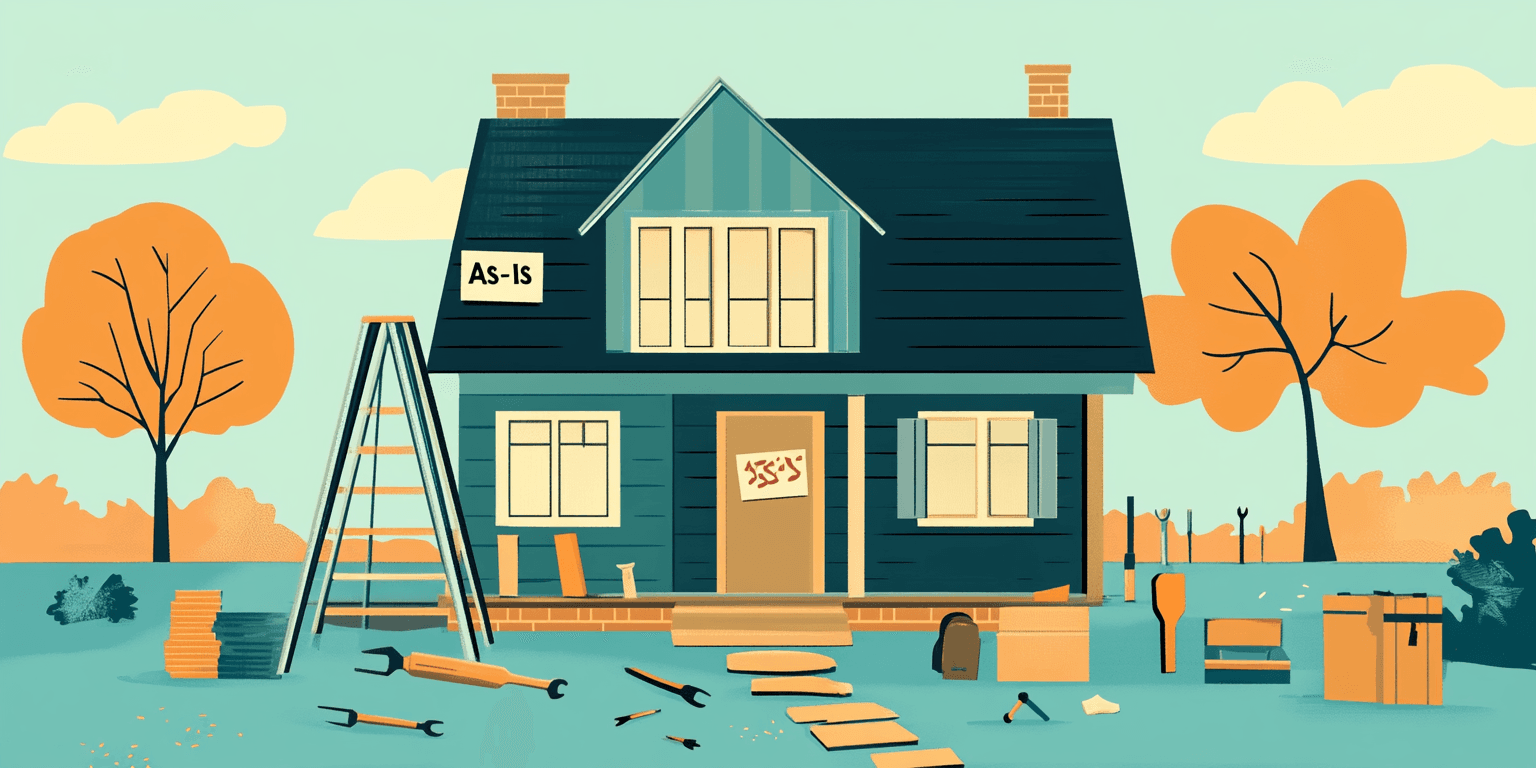
No. Taking the property with the open items on it is the whole point of an as-is purchase. When we buy, we read the record, price the known conditions into the offer, and take the correction work on ourselves afterwards. What cannot be ignored by anyone is a docketed lien, because a lien has to be paid to transfer clean title — so it is settled from the sale proceeds at the closing table. The practical difference is that you are not the one arranging contractors, filing paperwork and waiting at 9 Bond Street for a hearing date. Our cash offer process page lays out that sequence from first call to closing. And if what you want is to sell a Brooklyn house with open violations as-is, the offer we make is the offer — we do not re-trade it downward after an inspection finds the things you already told us about.
When is fixing the violations the better move than selling?
When the open items are curable paperwork rather than structural work, and you have the time and money to close them out. We would rather say this plainly than win a sale you regret. If your violations are two or three small summonses and your certificate of occupancy matches reality, correcting them and listing on the open market will almost certainly net you more than any cash offer, including ours. A sound Brooklyn house with a clean record deserves the full market.
Selling as-is earns its place in the harder cases: the illegal conversion that would cost six figures and a year of filings to legalise, the inherited house with liens already on the tax bill, the Class C conditions you cannot fix without a tenant’s cooperation, the estate where three siblings cannot agree to fund repairs. There, the repair path is not really a path. That is when it makes sense to talk to we buy houses Brooklyn companies — and to ask each one exactly which open items they are assuming and which they expect you to pay off at closing. The honest ones answer that in writing.

What should you do this week?
Find out what is open and whether any of it has become a lien — before deciding anything. Pull the record for your address, see what the Department of Buildings shows, check for hearings you missed at OATH, and ask whether anything has been converted to a lien on the tax bill. One afternoon of checking turns a vague dread into a list with numbers on it, and once you have the list, the choice between repairing and selling usually makes itself.
If the list is bad and you would rather hand the whole thing over, we will look at it with you. Use the form below to get a cash offer on your Brooklyn house, or call us at (347) 685-9317 and read the violations out over the phone. No obligation either way, and no judgment about how the house got here.
Get Your Free Cash Offer Now!
Fill out this form to get your no-obligation all cash offer started!
Get Your Free Offer TODAY!
"*" indicates required fields