
Downsizing Out of a Bronx Two-Family: Every Cost, in the Order You Actually Pay It
The hardest part of downsizing out of a house you have owned for thirty or forty years is almost never the decision. It is the discovery that selling costs money before it pays you anything. You are equity-rich and cash-poor, you have already pictured the smaller place, and then the estimates start arriving — and every one of them wants paying now, not at closing.
So this is not a list of fees. It is a timeline. We will walk the cost of selling a house in New York in the order a Bronx downsizer meets it, from the first dumpster to the last wire, flagging which bills you fund out of savings and which ones wait for the closing table. If you would rather skip the sequence, we buy houses in NYC for cash and almost nothing below would reach you.
One piece of orientation, because the Bronx is a particular place to sell. It is the only one of New York City’s five boroughs that is not mostly on an island — 1,472,654 people at the 2020 census — sitting north and east of Manhattan across the Harlem River and running north to the Westchester County line, where Mount Vernon picks up. Your block may feel suburban, but your paperwork is New York City paperwork, and the city’s costs are not Westchester’s.
Get Your Free Cash Offer Now!
Fill out this form to get your no-obligation all cash offer started!
Get Your Free Offer TODAY!
"*" indicates required fields
What do you spend before the house is ever listed?
Usually between a few hundred and several thousand dollars — and essentially all of it comes out of your own pocket, weeks or months before a buyer exists.
This is the stage nobody budgets for, and it is the stage that stops downsizers cold. A house lived in for decades has to be emptied enough to photograph. That means junk removal, priced by volume and climbing fast once you are into a full basement and a garage, plus a street permit if a container goes at the curb. Then the small concessions to presentation: paint in the rooms that show worst, a plumber for the thing you have lived around since 2011, a cleaning before the photographer.
None of it is reimbursed if the sale falls through, and for an owner on a fixed income the timing is the real cruelty: the money is in the house, and the house will not release it until the end.
Do you have to clear the house out yourself before you can sell it?
Only if you are selling on the open market. Retail buyers and their lenders need to see the house, so it has to be presentable. A cash purchase does not: the house transfers with whatever is still in it, and sorting four decades of belongings becomes something you do afterwards, on your own schedule, rather than a precondition of getting paid.
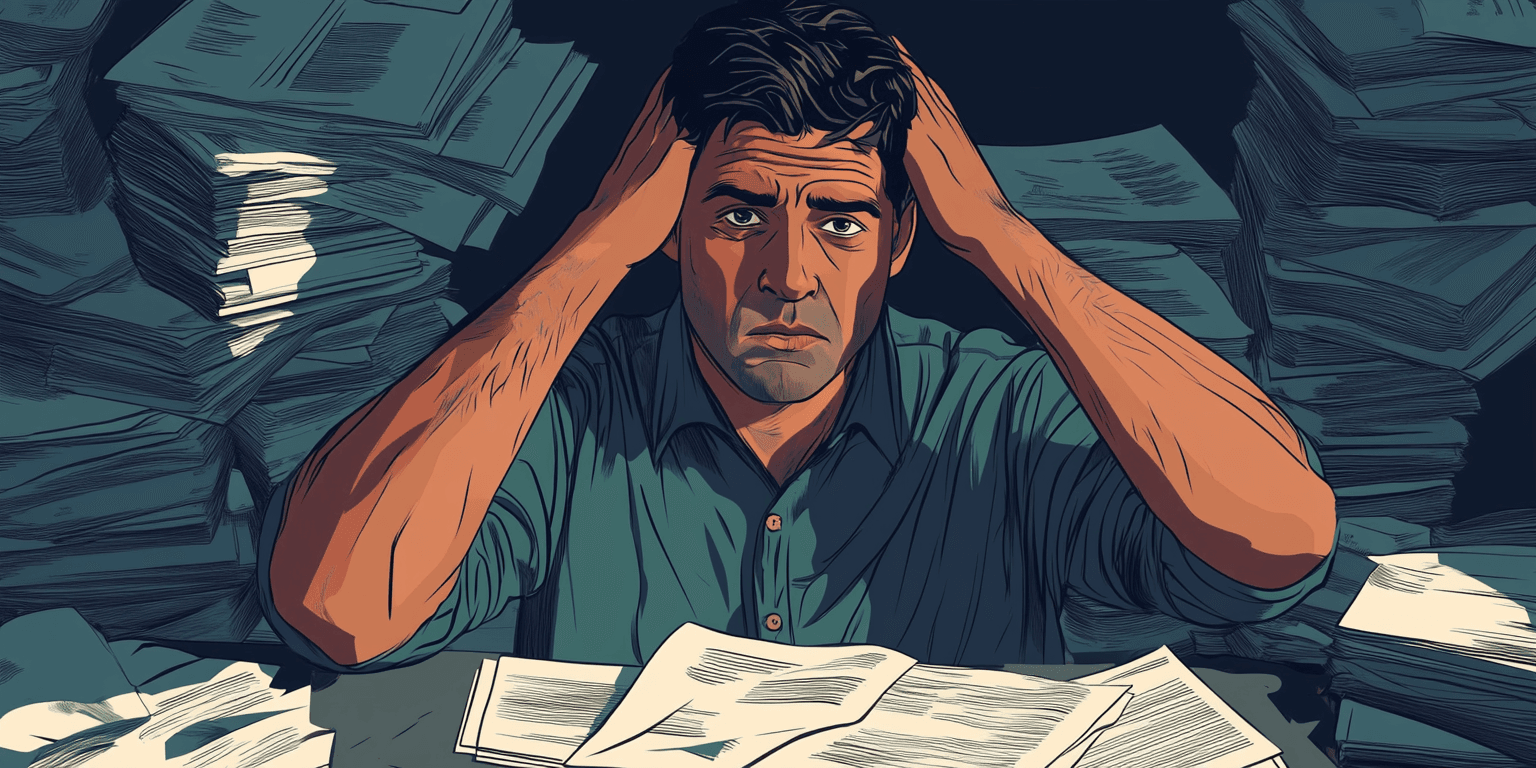
What is the real cost of selling a house in New York once you are under contract?
On a one-to-three family sale in the city, the seller’s side commonly lands somewhere between 6% and 9% of the price — and the transfer taxes alone account for 1.4% to 2.075% of that before anyone else is paid.
Percentages are easy to nod at, so put a number on them — a $750,000 Bronx two-family, an unremarkable price for a solid house up here.
Who pays the transfer taxes on a Bronx sale?
You do — both of them, city and state.
New York City’s Real Property Transfer Tax runs 1% of the price on residential sales at $500,000 or under, and 1.425% above that line. Sitting on top of it is the New York State transfer tax, charged at $2 per $500 of consideration — 0.4% — on sales under $3 million. The seller is the party legally responsible for them.
On our $750,000 house that is $10,687.50 to the city and $3,000 to the state: $13,687.50 in transfer tax, settled when the deed is recorded. In the Bronx that recording runs through the Office of the City Register, whose borough office sits at 1932 Arthur Avenue, with the return filed through ACRIS alongside the deed. Nobody negotiates this away.
Why does a water meter reading hold up Bronx closings?
Because the standard contract makes the reading your responsibility, and the Department of Environmental Protection sets the pace, not you.
The New York State Bar Association form contract that most city closings run on apportions water and sewer charges as of midnight the day before closing, and requires the seller to furnish a final water meter reading. Sellers who order one are sometimes told an inspector is weeks out, occasionally months. Meanwhile unpaid water and sewer charges are a property charge in New York City, which means a stale balance can be swept into the city’s lien sale — so no title company is going to shrug it off to keep your date.
It is an unglamorous item that has delayed more Bronx closings than any inspection report. If a hard move-out date is behind your sale, order the reading the week you sign, not the week you close.

What actually comes out at the closing table?
The commission, the two transfer taxes, your attorney, your remaining mortgage, and anything the buyer’s lender or inspector extracted from you along the way.
Broker commission is the largest single line and is negotiable, though 5% to 6% is still the conversation most sellers have. New York closings run through attorneys rather than title agents alone, so an attorney fee is not optional. Your payoff takes what is left of the mortgage or equity line, plus any lien on the house — an open Buildings or HPD violation tends to surface here as an escrow holdback.
Then the quiet one: carrying costs. Every month the house sits, you are still paying the taxes, the insurance and the heat on a building you have already mentally left. Three extra months on a Bronx two-family is real money that never appears on anyone’s estimate sheet.
Does a cash sale save a Bronx downsizer money, or just time?
Honestly? It mostly changes when you pay rather than the headline total — and if you are downsizing on a fixed income, that distinction is the entire point.
We will not pretend otherwise: a cash offer is below retail, and that discount buys speed and certainty. What it removes is the front half of this timeline. No commission, no cleanout before you can list, no repair list set by somebody else’s inspector, no staging, no showings, no months of carrying. Those are exactly the costs a downsizer funds from savings, which is why Bronx cash home buyers tend to be talking with people who are equity-rich rather than people chasing a top number.
What it does not remove is the transfer tax. That is statutory and the seller’s to pay no matter who the buyer is, and anyone who tells you otherwise is selling you something. Ask any buyer plainly which costs they absorb and get the answer in writing on the contract.
When is selling to a cash buyer the wrong move?
If your house is in decent shape, nothing is forcing your timing, and you can comfortably carry it for three or four months, list it on the open market.
A clean, updated Bronx two-family with a legal certificate of occupancy and no open violations is exactly what retail buyers compete over, and that competition more than repays the 6% to 9% you spent to reach it. We would rather tell you that than take the house.
A cash sale earns its discount in narrower circumstances: when the work needed is work you cannot fund, when something other than you is setting the closing date, when a tenant or a violation has made the house unfinanceable, or when the cleanout alone would cost you a season. If none of that describes you, call a good local agent instead.
What does the sequence look like if you skip the listing?
It collapses from four stages to two. You describe the house, we look at it once, and an offer follows — our cash offer process sets it out step by step. Then contract, title search, and a closing date you choose, with the water reading ordered up front so it never stands between you and your move. We buy as-is across the borough, from Throggs Neck up to Wakefield on the Mount Vernon line.

Ready to find out what the house would net you?
We are a family-run local buyer, not a call centre, and the conversation costs nothing. Fill in the form below for a real number, or call (347) 685-9317 if you would rather talk it through with a person. For the background first, our page on how to sell a house as-is in the Bronx covers the ground — and if the answer turns out to be “list it,” we will tell you that too.
Get Your Free Cash Offer Now!
Fill out this form to get your no-obligation all cash offer started!
Get Your Free Offer TODAY!
"*" indicates required fields